
Construction projects rarely go exactly according to plan. Schedules are created months in advance, activities are carefully sequenced, and milestones are established. Yet once construction begins, site realities often diverge from the original plan. Delays, resource constraints, design changes, and unforeseen site conditions can quickly impact project progress.
The challenge is not just creating a plan—it's continuously understanding how actual progress compares against that plan.
The Problem with Traditional Progress Tracking
Most construction projects still rely on spreadsheets, bar charts, manual reporting, and disconnected software tools to track progress. While these methods have been used for decades, they come with significant limitations:
- Progress updates are often delayed.
- Site data is collected manually and can be inconsistent.
- Reports reflect past performance rather than current reality.
- Decision-makers lack real-time visibility into project status.
- Forecasting future delays becomes difficult.
As a result, project teams often react to issues after they have already impacted the schedule.
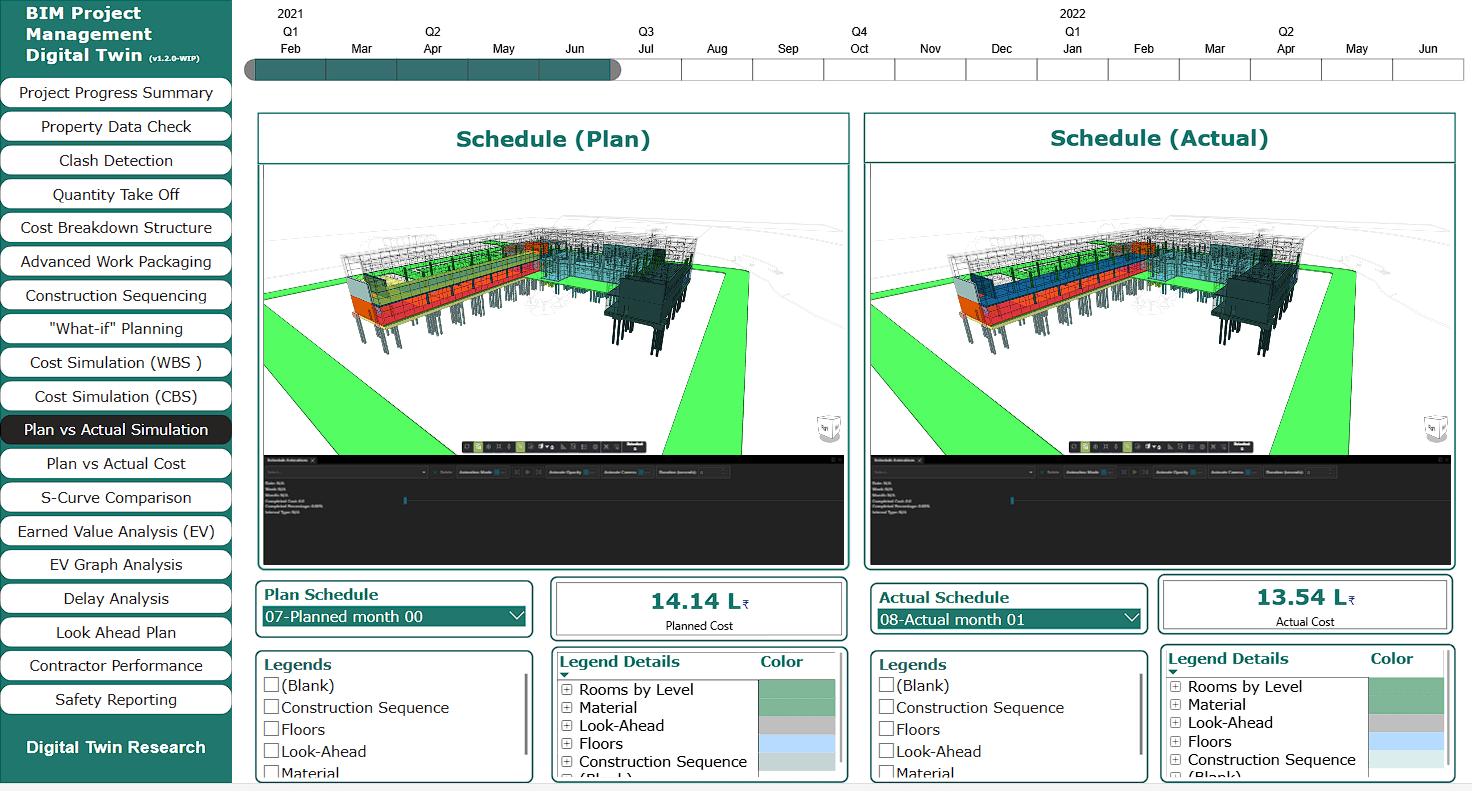
Moving Beyond Traditional Planning with BIM and Analytics
Building Information Modelling (BIM), combined with project management systems and analytics, creates a more intelligent way to monitor construction progress.
Instead of viewing schedules separately from the physical project, BIM links planning data directly to the digital representation of the asset. This creates a connected environment where planned activities and actual site progress can be compared visually and analytically.
The result is greater transparency, faster decision-making, and more accurate project control.
The BIM-Integrated Project Management Workflow
1. Link the Baseline Schedule to the BIM Model
The process begins by connecting the project schedule from tools such as Primavera P6 or Microsoft Project to the BIM model.
This transforms the model into a time-based representation of the project, often referred to as 4D BIM, where every element is linked to planned construction activities and dates.
2. Capture Actual Site Progress
Actual progress can be collected from multiple sources, including:
- Daily site reports
- Percentage completion updates
- Photographic records
- Drone surveys
- Laser scans
- Mobile field applications
This data provides an accurate picture of what has been completed on-site.
3. Compare Planned vs Actual Progress
Once actual progress data is captured, it can be automatically compared against the planned schedule.
Project teams can instantly identify:
- Activities ahead of schedule
- Delayed work packages
- Critical path impacts
- Area-specific progress variations
- Resource productivity issues
Visual comparisons within the BIM environment make it easy to understand where problems are occurring.
4. Generate Automated Progress Reports
Instead of spending hours creating manual reports, analytics platforms can automatically generate:
- Daily progress reports
- Weekly performance dashboards
- Monthly executive summaries
- Trend analysis charts
- Visual progress snapshots
Stakeholders gain access to consistent and reliable project information.
5. Update Forecasts and Short-Term Plans
Construction is dynamic, and schedules must evolve as conditions change.
By continuously comparing planned and actual performance, project teams can adjust look-ahead schedules, update forecasts, and proactively manage risks before they escalate into major delays.
Where the Construction Digital Twin Fits In
A Construction Digital Twin takes this concept even further.
By integrating BIM models, project schedules, site data, IoT sensors, drone imagery, and analytics into a single environment, the Digital Twin becomes a live representation of the project.
This enables teams to:
- Monitor progress in near real-time
- Detect schedule deviations early
- Improve forecasting accuracy
- Enhance collaboration across stakeholders
- Support data-driven decision-making
Rather than relying on static reports, project teams gain a continuously updated view of project performance.
The Future of Progress Monitoring
As construction projects become more complex, the need for accurate, real-time progress tracking continues to grow.
BIM, project management systems, analytics, and Digital Twin technologies are transforming how project teams monitor, measure, and manage construction performance. The ability to compare planned versus actual progress with confidence enables faster decisions, reduced risks, and improved project outcomes.
The future of construction project control is no longer based on reporting what happened yesterday. It is about understanding what is happening today and predicting what will happen tomorrow.