
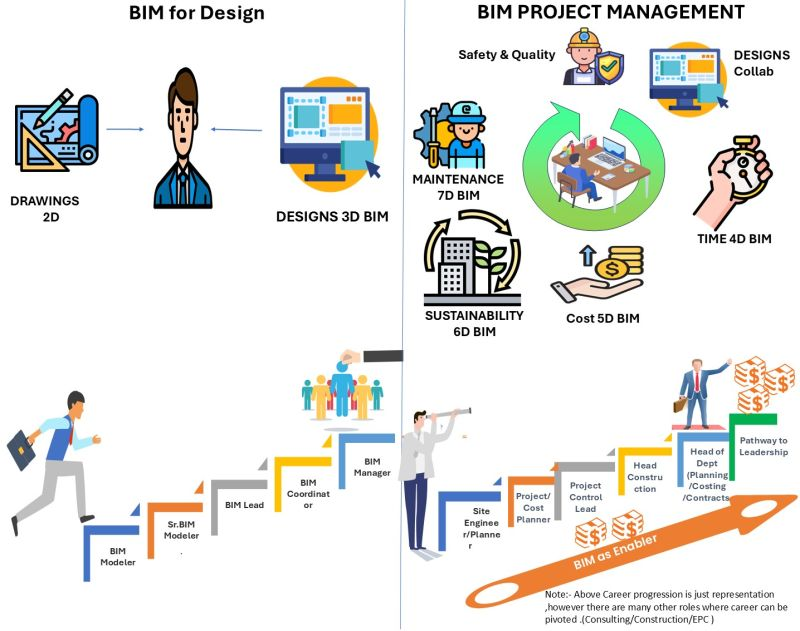
I've spoken with many young engineers and architects eager to build a career in BIM, often attracted by its perceived flexibility, office-based work, and quick path to the "BIM Manager" title.
But I always share a line from one of my favorite movies, Sarkar: "𝗡𝗮𝘇𝗱𝗶𝗾 𝗸𝗮 𝗳𝗮𝘆𝗱𝗮 𝗻𝗮𝗵𝗶, 𝗱𝘂𝗿 𝗸𝗮 𝗻𝘂𝗸𝘀𝗮𝗮𝗻 𝗱𝗲𝗸𝗵𝗼" ("𝗗𝗼𝗻’𝘁 𝗹𝗼𝗼𝗸 𝗳𝗼𝗿 𝗾𝘂𝗶𝗰𝗸 𝗴𝗮𝗶𝗻𝘀; 𝗰𝗼𝗻𝘀𝗶𝗱𝗲𝗿 𝘁𝗵𝗲 𝗹𝗼𝗻𝗴-𝘁𝗲𝗿𝗺 𝗼𝗽𝗽𝗼𝗿𝘁𝘂𝗻𝗶𝘁𝘆 𝗰𝗼𝘀𝘁𝘀"). I then asked them what comes after the BIM Manager. That question is often met with silence.
In my experience, few BIM Managers manage to pivot to higher roles. In construction projects, those who actively help teams on-site to work faster and stay within budget have stronger career growth prospects. The BIM Manager role typically falls within design and coordination, which accounts for just 8% of a project’s total cost. Meanwhile, procurement and construction—where BIM's application has immense potential—make up 92% of project costs.
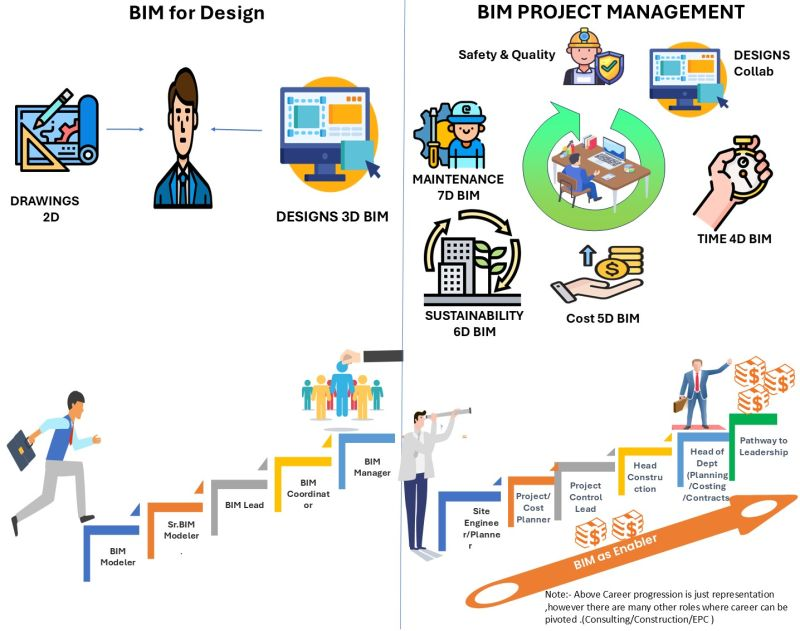
I firmly believe that young engineers who focus on BIM applications for construction management & Operations will find greater career longevity and success. Remember, you've invested four years in your engineering education — make sure you're getting the most out of it.
Note: The views expressed are personal and primarily relevant to the Indian market.
This article is written by Juzer Bastawala. Juzer has 17+ years of global project management experience in the construction industry, specializing in 5D BIM solutions and bridging industry gaps through innovative technology integration.